Renku Release | January 2026 • Research data repository integrations + Better collaboration + Support for ARM architectures

New in Renku for the New Year: We have added new integrations with research data repositories for frictionless data reuse, made it possible to build images for arm architectures, and improved collaboration flows!
Happy 2026, Renku community! 🚀
We hope you all had a refreshing break. While the year is just getting started, the Renku team was busy through the end of 2025 wrapping up some impactful features designed to make your collaborative research even smoother.
From better hardware support to more precise permission settings, here is a look at what’s new in Renku releases 2.10.0 through 2.12.1.
Expanding Data Access: New Connectors for EnviDat and OpenBIS
We are thrilled to expand Renku’s "connecting hub" capabilities with two highly requested data integrations that make bringing your research data into your compute environment even faster.
EnviDat Integration
Working with data from EnviDat, the environmental data portal of the Swiss Federal Research Institute WSL, is now effortless.
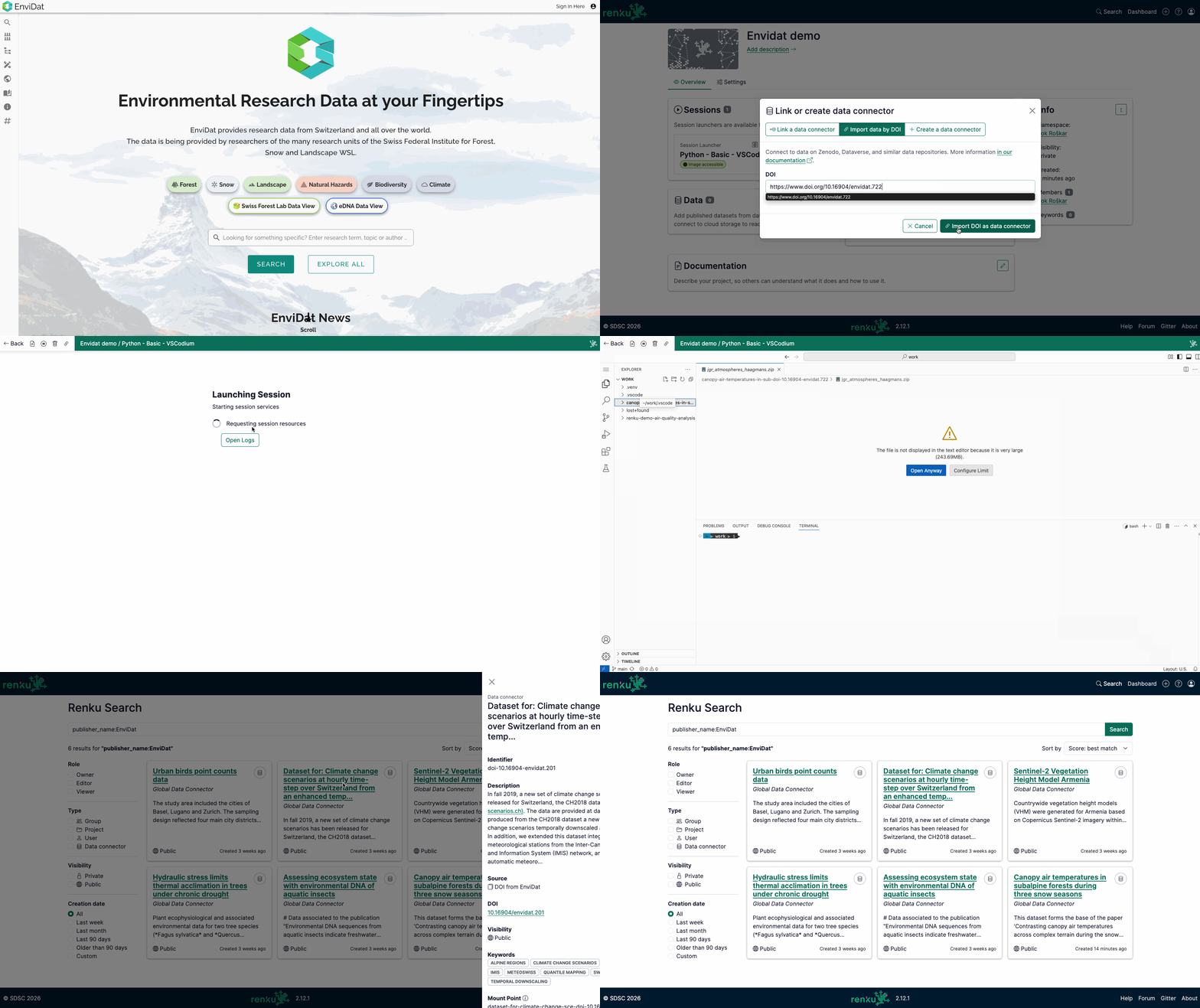
How it works: Simply copy a dataset’s DOI and create a Renku data connector in your project.
Renku automatically syncs the metadata, making the data searchable within Renku (just like our Zenodo and Dataverse integrations). When you launch a new session the data is automatically mounted, ready for immediate analysis without manual downloads.
Discover other datasets: We have also made it easier to discover other datasets
from specific providers; for example, on the search page you can use a query like publisher_name:envidat to see
all of the data connectors imported from EnviDat.
Enhanced OpenBIS Support
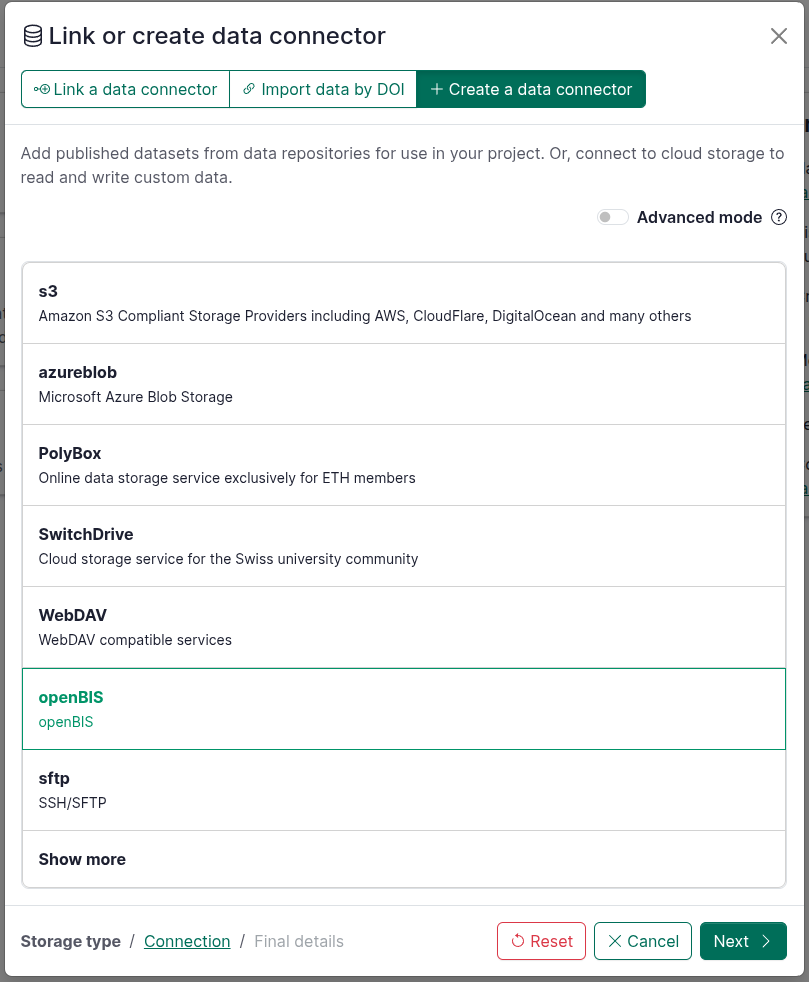
For researchers using openBIS, we’ve introduced a dedicated data connector type to streamline navigation and data fetching. You can configure your connector to point to a specific dataset in the openBIS instance for easier sharing. This solution offers an alternative to directly using openBIS APIs from within code (e.g. pyBIS for Python).
Note on connectivity: Many openBIS instances are hosted behind institutional firewalls. If you encounter any issues connecting to your instance from Renku, please reach out to us! We’re eager to help you get your data flowing smoothly.
Acknowledgment: We are very grateful for the support of the ETH Domain Open Research Data program, which made the development of these integrations possible through project funding in Measure 2, and for our collaboration with the NEXUS team who implemented the OpenBIS feature.
💻 Seamless Support for ARM Architectures
If you are working on a modern Mac (Apple Silicon) or running heavy workloads on HPC clusters like Alps (Daint) on CSCS, you know that architecture matters.
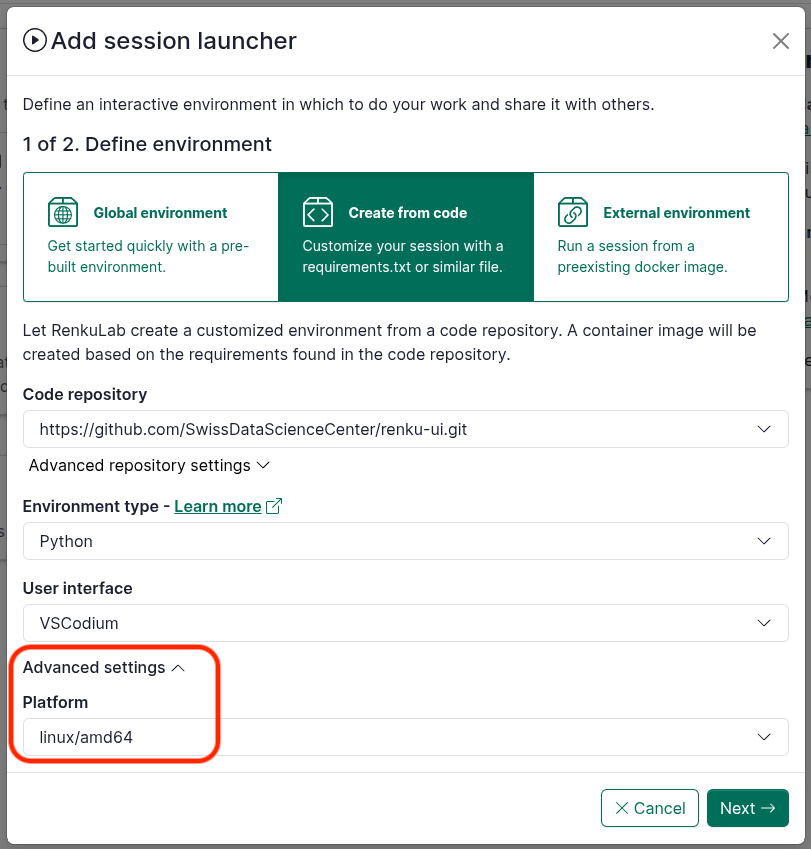
We’ve now automated the image-building process for arm64. When configuring your launcher, simply select the appropriate architecture, and Renku will automatically build the correct image for you. To save you from troubleshooting headaches, we’ve also added a warning if you attempt to launch an image on an incompatible compute resource.
Big thanks to our collaborators at Idiap for helping us build this functionality!
👥 Finer-Grained Group Permissions
We’ve refined how Group roles work to give you more control over your collaborative spaces.
- The Change: Previously, Group Editors had full administrative reach over all projects within a group.
- The New Way: Group Editors can now add new projects to a group, but they cannot modify the settings of projects they don't personally own.
This creates a clearer boundary for large teams, ensuring that only Project Owners and Group Owners remain in control of critical project configurations.
Make sure to check the group permissions page in our documentation for further insights.
🔌 Smoother Repository Onboarding
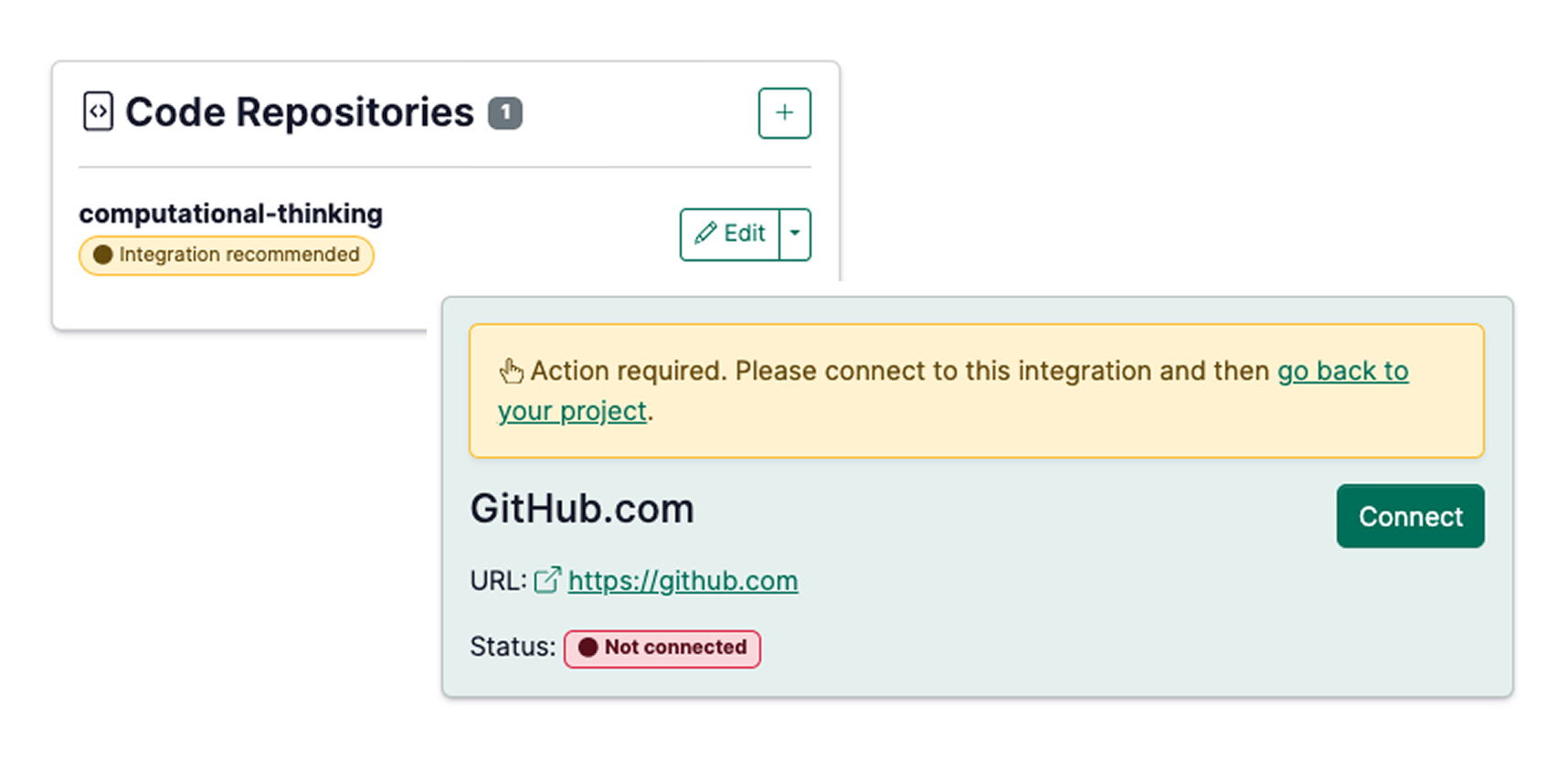
Many of you rely on our GitHub and GitLab integrations to keep your code in sync. We heard your feedback that it wasn't always clear if an integration was fully "active" until you were already inside a session, only to realize you couldn't push your code.
Now, Renku provides a clearer signal before you launch. If an integration is available but your credentials aren't linked, you'll see a prompt to connect them first. This ensures you enter your session ready to work, with all the permissions you need from the get-go.
🔗 Preserving Your Research: Legacy GitLab Redirects
With the shutdown of Renku’s legacy GitLab
instance
(gitlab.renkulab.io) coming at the end of this month, we want to ensure your
published work remains accessible.
If you have moved a repository to a new home (like GitHub or our new GitLab instance) and want to ensure old links, such as those in published papers, don't break, we have a solution. Simply fill out this form with your new repository location, and we will automatically redirect visitors from the old URL to the new one.
Full Release Notes
While these are the highlights, there were many other smaller fixes and performance tweaks in these releases. For the curious, you can find the full technical breakdown on our GitHub Releases page.
🐸 Ready to get started? Hop into renkulab.io and get a jumpstart with our documentation.
💬 We love to hear your feedback! Share questions, ideas, and suggestions with us on our forum.
🚀 Curious about what's coming next? Check out our roadmap to see what new features we're working on.